
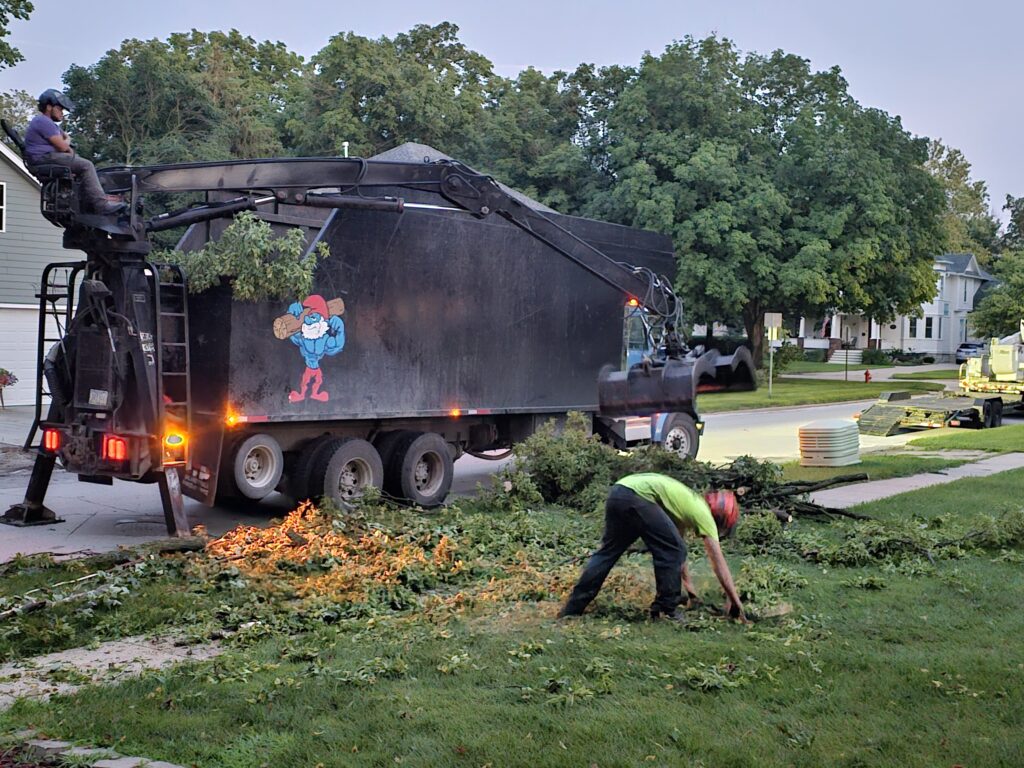
Severe weather can turn a healthy-looking tree into a serious property hazard in minutes. After high winds, heavy rain, or a strong thunderstorm, homeowners may be left with broken limbs, leaning trunks, exposed roots, or a tree resting on a roof or driveway. Knowing what to do next matters for safety and property protection. Storm damage tree removal in Des Moines starts with the same steps every time: identify immediate hazards, document the damage, and get the tree evaluated before making rushed cleanup decisions.
Central Tree Pros, a crane-equipped tree company based in Des Moines, handles emergency tree removal across the metro, and owner and CEO Zach Miller and Operations Manager Jack Wadden walked through how storm calls are triaged in Episode 3 of The Sawdust Sessions. Zach says same-day service is common for true emergencies in Ankeny, Waukee, and Pleasant Hill as well as in Des Moines.
What Should You Do First After a Tree Is Damaged by a Storm?
Your first priority is keeping people away from the damaged tree until you know how stable it is. Cracked trunks, suspended limbs, and disturbed roots may fail without much warning.
Keep children, pets, vehicles, and unnecessary foot traffic away. From a safe distance, look for a new lean, exposed roots, split wood, hanging branches, or soil lifting around the base. If the tree is touching a structure, do not assume it is safe just because it has stopped moving.
Power lines require even more caution. Never touch a tree, branch, fence, or other object that is in contact with a downed line. MidAmerican Energy’s tree-service guidance advises customers to involve the utility when tree work is near electric lines because special safety steps may be needed before pruning or removal begins.
If you can safely document the scene, take photos and videos before cleanup. Capture the tree, damaged structures, fallen limbs, and surrounding property. Those images may help with both professional assessment and an insurance claim.
How Can You Tell If a Storm-Damaged Tree Needs to Be Removed?
Not every damaged tree needs to come down. The decision depends on the condition of the trunk, roots, major branches, and remaining canopy, plus what would be at risk if the tree failed.
Signs Removal May Be Necessary
Major trunk splits, partial uprooting, extensive trunk damage, severe canopy loss, and a sudden lean can indicate serious structural problems. A tree deserves faster attention when the potential fall zone includes a home, garage, driveway, sidewalk, street, or neighboring property.
Iowa State University Extension’s guidance on evaluating damaged trees explains that split trunks, extensive trunk damage, partial uprooting, and major canopy loss can be signs that removal is necessary. It also recommends professional evaluation when homeowners are uncertain about whether a tree can be saved.
Root movement matters because roots anchor the tree. When wind lifts part of the root plate, the tree may lose enough support to become unstable even when the trunk still looks intact.
When a Tree May Still Be Saved
A tree with a few broken side branches may recover if the trunk, major limbs, and root system remain sound. Corrective pruning can sometimes remove damaged wood while preserving enough healthy canopy for the tree to continue growing.
Age, species, decay, previous defects, and the location of the damage all affect the decision. When structural stability is unclear, a professional assessment can help determine whether pruning, monitoring, or removal makes the most sense.
When Does Storm Damage Become a Tree Emergency?
Storm damage becomes an emergency when a tree or limb creates an immediate threat to people, structures, vehicles, utilities, or access.
Examples include a large branch hanging over a roof, a cracked trunk beside a driveway, roots lifting from the soil, or a tree blocking the only entrance to a property. Trees near electrical lines require a different response. Do not try to pull a limb away with a rope, pole, or vehicle.
Zach Miller put trees on structures first on the episode: “Anything on a structure takes priority because that’s mitigation work.” Trees that are leaning, uprooting, split, cracked, or rotted come next.
Not every broken branch needs emergency service. Small debris already on the ground can often wait. The important distinction is whether the damaged tree could still move, fall, or cause additional harm. If you cannot tell, keep the area clear until a qualified professional can inspect it.
What Should You Do If a Tree Falls on Your Home or Property?
If a tree lands on your house, garage, fence, vehicle, or another structure, make sure everyone is safe before thinking about cleanup. Leave the affected area if you notice major structural damage, electrical hazards, a gas odor, or continued cracking or shifting.
Call emergency services when there is an immediate danger. Do not climb onto a damaged roof to inspect the tree yourself.
Once conditions are safe, photograph the scene before major debris is moved. Take wide shots showing where the tree fell and closer images of visible damage. Then contact your insurer and a qualified tree service.
Trees resting on structures often need controlled removal. Cutting the wrong section can shift weight suddenly, damage the building further, or create a new hazard for anyone nearby.
Can Homeowners Remove Storm-Damaged Trees Themselves?
Small branches that are already on the ground may be manageable, but large or unstable storm damage should generally be left to trained professionals. Damaged limbs and trunks can be twisted, compressed, bent, or supporting one another.
The Iowa Department of Natural Resources’ storm-damaged tree guidance advises homeowners to limit cleanup to minor debris and avoid removing leaning trees or large debris from roofs. It also warns that tangled branches may release stored tension when moved or cut.
Chainsaws add another risk. OSHA’s tree-trimming safety guidance stresses planning cuts, watching for objects under tension, maintaining secure footing, and keeping a clear retreat path. Those precautions are difficult when a tree is tangled with a roof, fence, another tree, or utility equipment.
Avoid combining chainsaw work with ladders or climbing. If removal requires rigging, aerial work, utility clearance, or predicting how loaded wood will move, professional equipment and training are the safer choice.
What Happens During Professional Storm-Damaged Tree Removal?
Professional removal usually starts with a hazard assessment. The crew needs to understand how the tree failed, what remains unstable, what could be damaged, and how equipment can safely reach the work area.
Assessment and Planning
The tree service evaluates the trunk, roots, broken limbs, nearby structures, utility conflicts, and available drop zones. A simple fallen tree in an open yard may be straightforward. A split tree over a house may require ropes, rigging, or an aerial lift so pieces can be lowered instead of dropped.
Controlled Removal and Cleanup
Crews typically address the most unstable sections first while maintaining a safe work zone. The trunk can then be reduced in manageable sections.
Afterward, the scope may include cutting logs, chipping branches, hauling debris, or moving wood to a designated area. Stump grinding is often priced separately, so homeowners should confirm whether it is included.
Ask what will happen to the trunk, branches, stump, and cleanup before work begins. A clear scope reduces surprises once the immediate hazard is gone.
Does Homeowners Insurance Cover Storm-Damaged Tree Removal?
Coverage depends on your policy, the cause of the tree failure, and what the tree damaged. Homeowners should check with their insurer rather than assuming every removal is covered.
The Iowa Insurance Division’s guidance on tree damage and insurance explains that standard homeowners policies may cover damage when a tree or large branch falls suddenly because of a covered peril such as wind, hail, lightning, or the weight of ice or snow. When covered property is damaged, the policy may also provide some tree-removal coverage, subject to limits and terms.
A tree that falls in the yard without damaging covered property may be handled differently. Vehicle damage is generally addressed through auto insurance, with comprehensive coverage commonly applying to falling trees.
Before major cleanup, document the damage and keep estimates, invoices, and receipts. Your insurer or agent can explain deductibles, limits, and any claim requirements.
Zach Miller tied insurance to speed on the episode: “Homeowners have a due diligence with their insurance contract to mitigate damages immediately.” That is why Central Tree Pros treats a tree resting on a roof as its first priority after a storm.
How Should You Choose a Tree Removal Company After a Storm?
After a major storm, demand for tree services can rise quickly. That makes it important to look beyond who can arrive first.
Ask for proof of appropriate insurance and a written estimate describing the work. Confirm whether the price covers debris hauling, stump work, cleanup, or only getting the tree safely on the ground. Be cautious with vague pricing, pressure to sign immediately, or a recommendation to remove the tree without a proper inspection.
Experience with storm-damaged trees matters because unstable wood may require careful rigging and sequencing. Ask why the tree needs removal, whether any part can be preserved, and how nearby structures will be protected.
The International Society of Arboriculture provides a directory for finding and verifying ISA-credentialed arborists. Certification does not replace insurance or relevant experience, but it can help homeowners verify professional training.
A reliable company should explain the risk clearly enough that you understand what needs attention now, what can wait, and what the final price includes.
How Can Des Moines Homeowners Reduce Future Storm Damage?
No maintenance plan can make a tree storm-proof, but regular care can reduce avoidable weaknesses.
Have mature trees inspected periodically, especially those near homes, garages, sidewalks, driveways, and play areas. Dead branches, weak branch unions, cavities, root problems, and previous storm injuries may deserve closer attention. Structural pruning while trees are young can also encourage stronger growth.
Avoid topping trees as a shortcut for reducing height. Poor cuts can lead to weak regrowth and long-term structural problems. Protect roots as well. Construction, soil compaction, trenching, and major grade changes can affect stability even when the trunk still appears healthy.
After major weather, look again for cracks, hanging limbs, exposed roots, or a new lean. Catching those changes early gives you more options.
For homeowners researching storm damage tree removal in Des Moines, prevention should be part of the conversation too. Routine inspections and thoughtful pruning can help identify which trees are healthy, which need maintenance, and which may present a growing risk.
Need Help After a Storm? Start With Safety, Not Guesswork
A damaged tree can leave you worrying about several things at once: your roof, another falling limb, cleanup costs, and whether the tree can be saved. Those are difficult decisions to make when severe weather has already disrupted your property.
Central Tree Pros can evaluate the damage, explain the hazards, and help you understand the safest next step. That may mean removing a dangerous tree, addressing broken limbs, or determining that some work can wait.
If a storm has left you unsure what to do, contact Central Tree Pros for a professional assessment. A clear plan can help you move from emergency cleanup toward protecting your property with confidence.
Frequently Asked Questions
How Quickly Should a Storm-Damaged Tree Be Removed?
A tree threatening people, buildings, vehicles, utilities, or property access should be addressed as soon as it can be handled safely. Less urgent damage can usually wait for a scheduled assessment. Zach Miller says Central Tree Pros usually reaches true emergencies within a couple of hours or the same day.
Can a Tree Survive After Losing Large Branches?
Yes. Survival depends on how much canopy was lost, where branches broke, and whether the trunk, roots, and remaining structure are healthy.
Should I Remove a Tree That Started Leaning After a Storm?
A new lean should be evaluated promptly because it may indicate root movement or structural failure. Keep people away from the potential fall zone until it is assessed.
Who Should I Call If a Tree Falls on a Power Line?
Stay away from the tree and line, then contact the electric utility and emergency services when appropriate. Never try to cut or move a tree touching electrical equipment.
Should I Take Photos Before Tree Cleanup Begins?
Yes. Photograph the tree and property damage from safe locations before major cleanup when possible. Photos can help document the event for insurers and contractors.
Does Every Cracked Trunk Mean the Tree Must Be Removed?
No. The crack’s location, depth, and extent matter. However, major trunk splits can seriously weaken a tree and should be evaluated by a qualified professional.
Can Broken Branches Be Pruned Without Removing the Whole Tree?
Yes. If the trunk, roots, and remaining canopy are structurally sound, proper pruning may remove damaged branches while preserving the tree.