
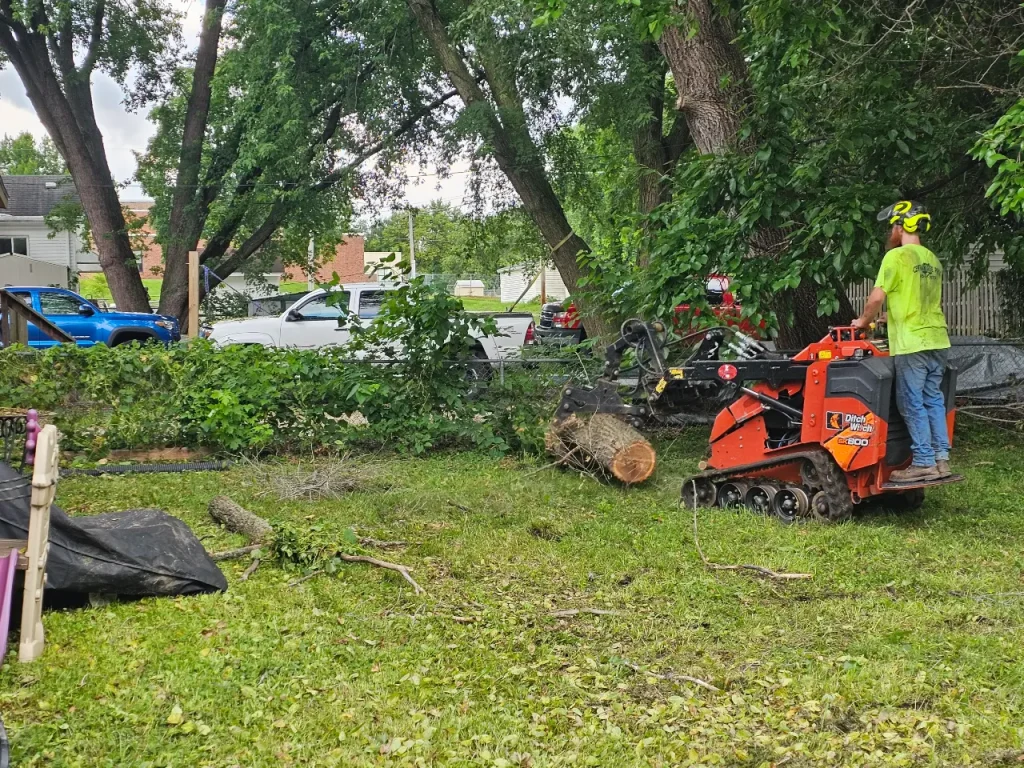
Clearing land costs about $1,500 to $6,000 an acre in 2026, typically around $3,500, depending on what grows there and what must be gone when the crew leaves. You have plans for your property, whether that means building a home, opening up your backyard or making an overgrown lot useful again. So how much does it cost to clear land for your project? The answer depends on more than the number of acres. Trees, stumps, terrain, equipment access and cleanup can all change the final price. This guide breaks down realistic 2026 costs, explains what may be missing from an estimate and helps you plan the work without paying for services you do not need.
Central Tree Pros is a Des Moines tree service that handles land clearing for homeowners, builders and public projects across the metro, including Ankeny, Waukee and Johnston. On Episode 6 of The Sawdust Sessions, owner and CEO Zach Miller and operations manager Jack Wadden talked through what large clearing jobs involve, and their answers run through this guide.
What Should You Budget for Land Clearing in 2026?
Budget about $1,500 to $6,000 per acre for basic clearing, with an estimated national midpoint near $3,500. Mature trees, limited access and debris hauling can push costs higher.
These figures come from Cost Home Book, a residential project cost reference that updated its estimates on September 22, 2026. They are national estimates, not Central Tree Pros quotes.
Estimated basic clearing cost per acre, by property condition:
- Light brush and saplings: $1,500 to $2,500 per acre
- Moderate brush with scattered trees: $2,500 to $4,000 per acre
- Wooded, with mature trees: $4,000 to $6,000 per acre
These prices are for basic clearing. Compare quotes carefully: stump work and hauling may be excluded. Ask whether mobilization, equipment time and final cleanup are already included. A useful estimate describes the finished property as clearly as it describes the work itself.
What Does It Cost to Clear Land by Property Size?
Acreage sets the baseline, but small lots often carry minimum charges, while larger sites can spread equipment costs over more ground.
Quarter-Acre and Half-Acre Lots
Smaller residential lots can still involve serious work. Less brush means less work, but equipment transport costs apply regardless of size. Fencing, nearby homes, limited entrances and trees hanging over structures can also increase complexity.
A wooded half-acre being prepared for a house may require several separate operations, so the cost may exceed half of a typical one-acre quote. For smaller sites, ask whether the contractor has a minimum project charge. That information is often more useful than a broad per-acre average.
One-Acre Properties
An acre may contain only grass and saplings or dozens of mature trees. Using the national ranges above, a lightly wooded acre might fall around $1,500 to $2,500, while heavy vegetation could approach $4,000 to $6,000 before extra site work.
Keeping selected trees reduces disturbance and preserves privacy.
Two Acres or More
Larger sites may improve equipment efficiency but generate more debris. Multiply the applicable per-acre range by your planned clearing area, then verify it with a site-specific estimate.
Size is not always the hard part. Wadden says bigger plots tend to be easier, because there is room to bring in larger equipment and drop trees without as many hazards, while a developer’s lot that runs right up to a property line is trickier.
What Factors Have the Biggest Impact on Land Clearing Costs?
Tree size and density, terrain, access and cleanup drive the price, and a site visit reveals obstacles that maps and listing photos miss.
Tree Size and Vegetation Density
Tall trees take more planning and controlled removal than weeds or thin brush. Mature trunks need more careful cutting, and dense undergrowth also slows access.
A wooded building lot may also need stump removal and disposal. Miller puts the line between land clearing and ordinary tree removal at roughly ten trees, because past that you are clearing the property for a reason.
Terrain, Drainage, and Soil
Flat, firm ground generally allows machinery to work more efficiently. Steep slopes, muddy areas, exposed rock and uneven terrain change how equipment can travel and where material can be placed.
Wet soil can rut easily, so timing matters. If your property drains poorly, ask how the crew plans to protect access routes and whether restoration of damaged ground is included.
Equipment Access and Nearby Structures
A wide, clear entrance can make a job straightforward. Narrow gates, retaining walls, overhead lines and nearby buildings may call for smaller machines or more careful removal methods.
Trees near structures or utility lines require appropriate safety measures.
Labor, Machinery, and Cleanup
Quotes reflect crew time, equipment, transport and cleanup. An excavator, skid steer, chipper or crane may be useful for different parts of a project.
On large clearing jobs, Miller says Central Tree Pros brings side dumps, semis, whole-tree grinders, excavators, big skid loaders and dozers, which is a very different setup from removing one tree. Cutting trees and leaving logs is also different from hauling everything away.
What Land Clearing Methods Are There, and What Does Each Include?
The main methods are brush clearing and selective removal, forestry mulching, tree removal with stump work, and complete lot clearing, and the right one depends on what the land is for.
Brush Clearing and Selective Tree Removal
Brush clearing focuses on vines, shrubs and small growth. Selective tree removal targets specific trees while keeping others. These approaches make sense when you want better access or more usable outdoor space without stripping the entire property.
Mark trees to preserve and confirm clearing boundaries.
Forestry Mulching
Forestry mulching uses specialized equipment to shred vegetation into material left on site. It can reduce hauling and retain ground cover.
Mulching leaves roots in place, so it is useful for trails but not necessarily for building pads.
Tree Removal and Stump Work
Large trees may need to be cut in sections and lowered in a controlled manner. Afterward, you must decide what happens to the stump.
Stump grinding reduces a stump below the surrounding surface. Grubbing or excavation removes larger root material when a building pad, utility corridor or other project requires it. Quote these tasks separately. Grinding works well when a stump needs to disappear from a yard, but it may not remove enough root material for a foundation. The intended use determines the appropriate finish.
On build sites, Miller says his crews tend to dig stumps out with excavators instead of grinding them. Because that is digging, the Iowa Utilities Commission says Iowa law requires underground utility lines to be marked first, through Iowa One Call or 811, at least two days before digging, not counting weekends and legal holidays.
Complete Lot Clearing
Complete clearing can involve removing trees, brush, stumps and debris across a defined area. Grading and excavation may still be needed, so ask what condition the crew will leave behind.
What Extra Costs Can Change Your Final Bill?
Stump and root removal, debris disposal, permits, erosion control and grading are the extras most often left out of a basic clearing quote.
Stumps, Roots, and Debris Disposal
An estimate that covers cutting does not always include stump grinding, root removal, log hauling or disposal charges. Keeping suitable mulch or logs on site may reduce some hauling, but only if you have space and a practical use for them.
Burning is limited, too. The Iowa Department of Natural Resources says landscape waste from clearing, grubbing and construction may be burned only in areas at least one-quarter mile from any building inhabited by anyone other than the landowner or tenant doing the burning.
Ask your builder where underground roots must be removed.
Permits and Erosion Protection
Local tree rules, protected areas, wetlands and land-disturbance requirements deserve attention before work starts. In Iowa, the Iowa Department of Natural Resources states that stormwater permit coverage is required for construction activity that disturbs one acre or more. Smaller areas may also be covered when they form part of a larger common plan of development.
Not every brush-clearing job needs this permit, but local approvals and erosion controls can add costs. Property boundaries should also be verified before work starts, especially when clearing takes place near a neighbor’s trees or fence.
Grading and Site Preparation
Clearing removes unwanted vegetation. Grading reshapes the ground for drainage and the next stage of construction. Excavation, topsoil handling and soil stabilization may be separate contracts.
Coordinate with your builder before the clearing footprint is set.
How Do You Build a Realistic Land Clearing Budget?
Start with what the project needs cleared, usually the building pad, driveway and utility routes, and leave the surrounding woods where they can stay.
Wadden’s advice is to go in with a clear plan, knowing the end goal so the cost stays as effective as possible, and to have the company see the site before it quotes. Walk the property and list large trees, slopes, wet areas, fencing and restricted access. Mark trees to save, then identify stump work, hauling and grading needs.
Consider this hypothetical one-acre example. A lot with moderate growth might have a basic clearing allowance of $2,500 to $4,000. If construction requires extensive stump removal, the budget will rise. Hauling debris and later grading could add separate charges as well. This is an illustration, not a quote.
Request a written, itemized estimate so you know what affects the final price. Compare two possible outcomes: a site with cleared brush but remaining logs, and one with vegetation removed, stumps addressed and debris hauled away. The second quote may be higher because it delivers a different result.
Should You Clear Land Yourself or Hire a Professional?
Small brush work can be a DIY job, but mature trees, unstable limbs, steep ground and heavy machinery belong with a professional crew. Removing a few small bushes or maintaining a previously cleared area may be reasonable to do yourself.
The Occupational Safety and Health Administration identifies falling branches, equipment hazards, falls and contact with power lines as significant risks during tree care and removal.
Rental, fuel, safety gear and disposal add up, and mistakes can be much more expensive. Before renting machinery, consider whether you can transport it, operate it safely and restore the ground afterward. For substantial jobs, professional crews assess hazards and define cleanup upfront.
How Can You Save Money Without Cutting Corners?
Clear only what the project needs and compare written scopes, because a focused plan reduces unnecessary cutting and expense.
- Clear only what your project requires. Preserve healthy trees where they will not interfere with construction or safety.
- Mark the work area clearly. Defined limits reduce confusion and help protect neighboring vegetation.
- Discuss on-site processing. Depending on your plans, leaving acceptable mulch on site may reduce hauling.
- Coordinate contractors. Confirm building, driveway and utility locations before clearing begins.
- Compare written scopes. A low quote is not a bargain if essential cleanup is missing.
Ask about savings that will not complicate the next stage of the project.
How Do You Choose a Land Clearing Contractor in Des Moines?
Look beyond the lowest number to insurance, equipment, the plan for stumps and debris, and the condition the site will be left in. Ask how the company handles trees near buildings or overhead lines, and request clear descriptions of stump treatment, debris removal and the finished site.
If a builder follows, coordinate scheduling and equipment access. Before hiring any company, confirm who will request the utility locates, how nearby trees will be protected and whom to contact if site conditions change during the job.
Central Tree Pros serves Des Moines and surrounding communities with land clearing, tree removal, stump grinding and related services, and offers free written estimates with clearly defined work. Its crews cleared about 15 to 20 acres near Four Mile for the City of Des Moines in about two weeks, in the middle of winter. Our guide to choosing the best land clearing company near Des Moines for large properties covers what to ask in more depth.
Make Your Land Clearing Plan Before the Work Begins
The question of how much it costs to clear land is easier to answer once you know what must be removed, what can stay and how the space needs to function afterward. Start with a clear scope, not acreage alone.
Get Your Property Ready Without Unwanted Surprises
Whether an overgrown lot has been on your mind for years or a build date is approaching, unexpected costs can slow your plans. You deserve a clear scope before agreeing to a price.
At Central Tree Pros, we help homeowners, property owners and contractors across the Des Moines area plan practical land clearing projects. Our crews handle tree removal, stump grinding and site clearing with an emphasis on safety, efficient work and cleanup.
Request a free, no-obligation written estimate from Central Tree Pros. Tell us what you want to do with your property, and we will help you determine the next step.
Frequently Asked Questions About Land Clearing
How Much Does It Cost to Clear One Acre of Wooded Land?
A wooded acre with mature trees costs roughly $4,000 to $6,000 for basic clearing under 2026 national estimates. Mature tree removal, stumps, hauling and difficult access can raise the total, so get a local quote for accurate pricing.
Is It Cheaper to Leave Tree Stumps in Place?
Usually, yes, because removing or grinding stumps requires additional labor and equipment. Leaving them may be acceptable in some natural areas, but stumps and roots can interfere with construction, utilities, mowing and future landscaping.
How Long Does It Take to Clear One Acre?
A simple brush-covered acre might be cleared in a day with suitable machinery. Dense trees, restricted access, wet soil and stump removal may take several days or longer, so a site evaluation gives a more reliable timeline.
Does Land Clearing Include Grading?
Not automatically. Clearing removes vegetation and specified debris, while grading changes soil elevations or drainage. Some proposals combine the services, so confirm exactly which tasks and final conditions are included.
What Is the Cheapest Way to Clear Overgrown Land?
For light vegetation, selective brush clearing may cost less than full removal, and forestry mulching can reduce hauling in suitable settings. The least expensive appropriate method depends on your vegetation and how you plan to use the land.
Do I Need a Permit to Clear Land in Iowa?
It depends on the location and project. Construction activity that disturbs one acre or more needs stormwater permit coverage from the Iowa Department of Natural Resources, and local tree or grading rules may also apply, so check before scheduling work.
Should I Clear My Lot Before Talking to a Builder?
Usually, speak with your builder first. Knowing the proposed building footprint, driveway, utilities and drainage plan can help you avoid removing trees unnecessarily or paying to clear the same area twice.